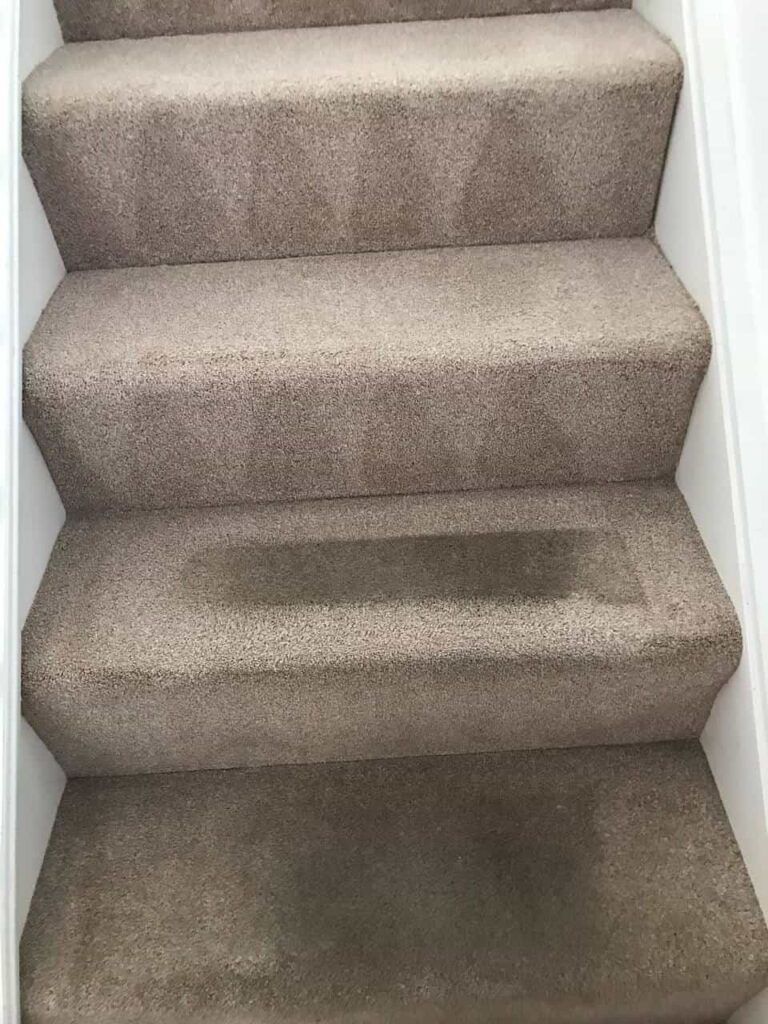
Hallways, entrances, stairs and routes between frequently used rooms often begin to look worn before the rest of a carpet. These areas receive repeated foot traffic, which pushes soil deeper into the fibres and gradually changes the appearance of the pile.
A dark or flattened traffic lane does not always mean that the carpet needs replacing. Professional carpet cleaning can remove embedded contamination, treat localised marks and improve the overall consistency of the surface. The likely result depends on whether the problem is primarily soiling or permanent fibre wear.
How Professional Carpet Cleaning Can Refresh Frequently Used Areas
Why High-Traffic Areas Look Different
Everyday footwear carries fine soil, dust and outdoor debris onto a carpet. Larger particles may be removed through routine vacuuming, but finer material can settle lower within the pile.
Repeated footsteps then press this contamination against the fibres. Oils transferred from footwear, bare feet and household activities may also make the area attract further dirt. Over time, commonly used routes can appear darker than the surrounding carpet even when they are vacuumed regularly.
Entrances, doorway thresholds and the spaces in front of sofas are particularly vulnerable because movement is concentrated within a relatively narrow area.
Distinguishing Soiling From Permanent Wear
Professional cleaning can improve contamination, but it cannot replace carpet fibres that have been physically damaged or worn away. Correctly identifying the cause helps establish realistic expectations.
A dark traffic lane may be caused by removable soil if:
- The fibres remain present but look dull
- The carpet feels sticky or heavily compacted
- The appearance has changed gradually through regular use
- Marks are concentrated around entrances and common routes
- The area temporarily looks better after thorough vacuuming
Permanent wear is more likely when fibres are missing, frayed, distorted or unable to reflect light in the same way as the surrounding pile. Cleaning may still improve the colour and freshness of the area, but it will not reconstruct damaged fibres.
Removing Embedded Dry Soil
Dry soil should be removed before wet cleaning begins. Thorough professional vacuuming can lift loose particles from deeper within the carpet and prepare the fibres for further treatment.
This stage is important because fine grit can act abrasively when people walk over it. Removing as much dry contamination as possible also allows the cleaning solution to work more effectively on bonded dirt and oily residues.
Corners, edges, stairs and doorway areas often need particular attention because ordinary vacuuming may not reach them consistently.
Treating Oily Traffic-Lane Build-Up
Some high-traffic areas remain dark after vacuuming because soil has bonded to oily residues on the fibres. Professional pre-treatment helps loosen this contamination before extraction.
The cleaning product and method should be selected according to the carpet fibre, construction and condition. Allowing the treatment suitable contact time can improve soil removal without relying on excessive agitation.
Heavily affected areas may require additional attention, but stronger treatment is not automatically better. The process must remain appropriate for the particular carpet.
Extracting Contamination From the Carpet
Professional extraction rinses suspended soil and cleaning residues from the carpet. Controlled equipment helps regulate moisture while removing contamination that ordinary surface cleaning may leave behind.
A methodical approach is important in traffic lanes because uneven cleaning can create visible differences between treated and untreated sections. Cleaning the wider carpet, rather than concentrating only on one dark strip, often produces a more consistent finish.
Proper extraction also reduces the likelihood of residue remaining in the fibres and attracting fresh soil prematurely.
Lifting and Grooming Flattened Fibres
Foot traffic can compress the carpet pile and cause it to lie in one direction. This affects how light reflects from the surface and can make an area appear darker even when it is relatively clean.
Cleaning and careful grooming may help separate and realign fibres, improving the appearance of mild flattening. This can make the carpet look more even once it has dried.
However, fibres that have been permanently crushed or distorted may not fully recover. The age, pile type and extent of wear will influence the result.
Improving Stairs, Hallways and Entrances
High-traffic areas often need a more detailed approach than open floor space. Stair treads may hold concentrated soil near their edges, while hallway carpets can develop distinct walking lanes along their centre.
Entrances may also contain outdoor soil and moisture that differ from the contamination found elsewhere in the property. A professional cleaner can adapt the treatment to each area while considering the carpet as a complete installation.
For homes and premises in Ramsgate, Kent, this targeted approach can improve heavily used sections without assuming that replacement is the only option.
Helping the Carpet Look More Consistent
Cleaning can reduce the visual contrast between busy routes and less frequently used sections. Removing dulling residues may reveal more of the carpet’s original colour and texture.
The final appearance will depend on several factors:
- Carpet age and fibre type
- Level of embedded soil
- Previous cleaning treatments
- Extent of pile distortion
- Presence of permanent staining
- Physical loss or damage to fibres
- How quickly new soil is introduced
An honest assessment should explain which changes are likely to improve and which are caused by irreversible wear.
Reducing the Return of Traffic Lanes
After professional cleaning, regular maintenance can help preserve the result. Frequent vacuuming prevents loose soil from being repeatedly driven into the pile.
Entrance mats can reduce the amount of outdoor debris reaching the carpet, while rotating movable furniture may help distribute foot traffic more evenly. Spills and marks should be addressed promptly using methods suitable for the carpet.
It is also important to avoid leaving unsuitable cleaning products in the fibres, as sticky residue can cause treated areas to become dirty again quickly.
Why Professional Assessment Matters
A trained carpet cleaner can inspect the fibre, construction, colourfastness and level of wear before selecting a treatment. Testing helps reduce the risk of inappropriate products or excessive moisture being used.
The assessment can also determine whether a dark patch is caused by general soiling, a specific stain, pile reversal or permanent wear. This ensures that the cleaning process targets the actual problem and provides realistic expectations.
Conclusion
Professional carpet cleaning can improve high-traffic areas by removing embedded dry soil, loosening oily residues, treating localised marks and grooming compressed fibres. Where the carpet remains structurally sound, this may significantly refresh its appearance without recarpeting.
K&S Carpet Cleaning Ramsgate provides professional carpet cleaning throughout Ramsgate, Kent. If your hallways, stairs or other frequently used areas are looking dull or heavily soiled, contact our team to arrange an assessment and discuss a suitable cleaning approach.
Call us on: 01843 264 295
Click here to find out more about K&S Carpet Cleaning Ramsgate
Click here to complete our contact form and see how we can help with your carpet needs.